


Projects
Overpass Construction Project at Dai An Industrial Park, Hai Phong
Hanoi Vietnam directly executed bored pile drilling works for the Dai An Industrial Park overpass using an 18m casing solution, a 60kW electric vibro hammer, and Indian bentonite slurry.
The Dai An Industrial Park Overpass – Hai Duong City (now under Hai Phong administrative jurisdiction) is constructed in an area characterized by weak ground conditions and complex stratigraphy, consisting of multiple layers of organic clay, silty clay, and poorly graded soil. Hanoi Vietnam Co., Ltd. was the main contractor directly responsible for the bored pile foundation works of the entire bridge substructure.
To ensure absolute safety, quality, and construction progress, we deployed specialized equipment and tailored technical solutions specifically designed for challenging ground conditions.
In this article, Hanoi Vietnam provides an in-depth analysis of the technical aspects, operational performance, construction costs, and comparisons with alternative bored pile drilling systems, helping engineers and project owners make informed decisions.
Geotechnical Characteristics of the Dai An Industrial Park Overpass
The subsurface profile at the project site consists of weak to medium-strength soil layers, interbedded with mud, silty clay, sand mixed with gravel, and poorly compacted fill. The geological stratification can be summarized as follows:
- D – Fill soil: Artificial fill with low bearing capacity, prone to settlement during construction.
- B – Organic silty clay (ML, MH): Extremely weak soil, highly plastic, easily deformable, with a high risk of borehole collapse.
- TK1 – Low plasticity clay (CL): Soft plastic condition with moderate bearing capacity.
- TK2 – Clayey sand (SC): Medium dense structure with organic content, requiring stable slurry control.
- Layer 1 – Sandy soil mixed with silt and gravel (SM, SC, SP): Loose to medium dense, susceptible to erosion during drilling.
- Layers 2, 3, 4 – Clay and silt (MH, ML, CL, CH): Ranging from very soft to semi-stiff, with a high collapse risk at greater depths.
- Layers 5, 6, 7 – Sand, gravel, cobbles (SP, GP): Dense to very dense layers requiring high torque drilling capacity.
Given these complex ground conditions, careful calculation and selection of casing length, slurry stabilization, and drilling equipment capacity were essential.
Construction Equipment: 7055 Drilling Rig and 50-Ton Support Cranes
To meet the demanding geotechnical conditions, the construction setup included:
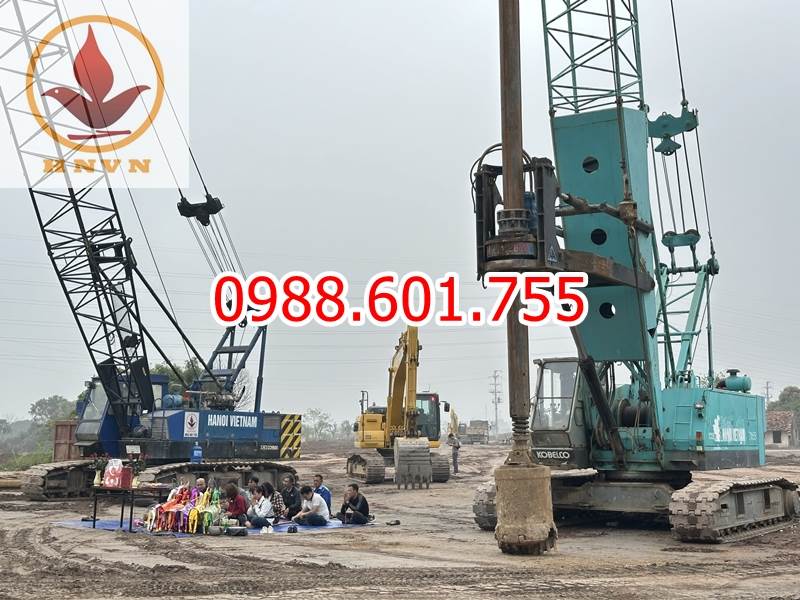
- 7055 Bored Pile Drilling Rig:
- Equipped with a 4-section Kelly bar, each section 19m long, enabling drilling depths up to 60–70m when required.
- Well-suited for interbedded weak soil and dense gravel layers at depth.
- Support cranes:
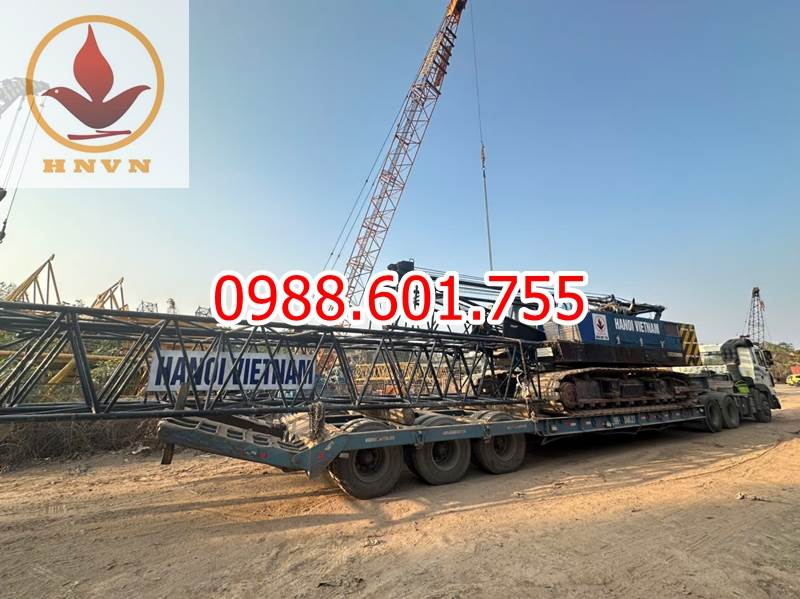
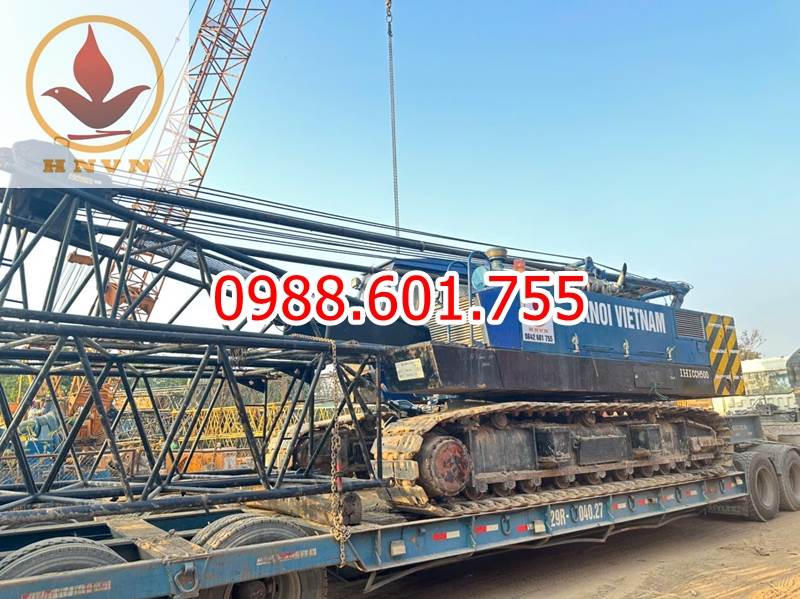
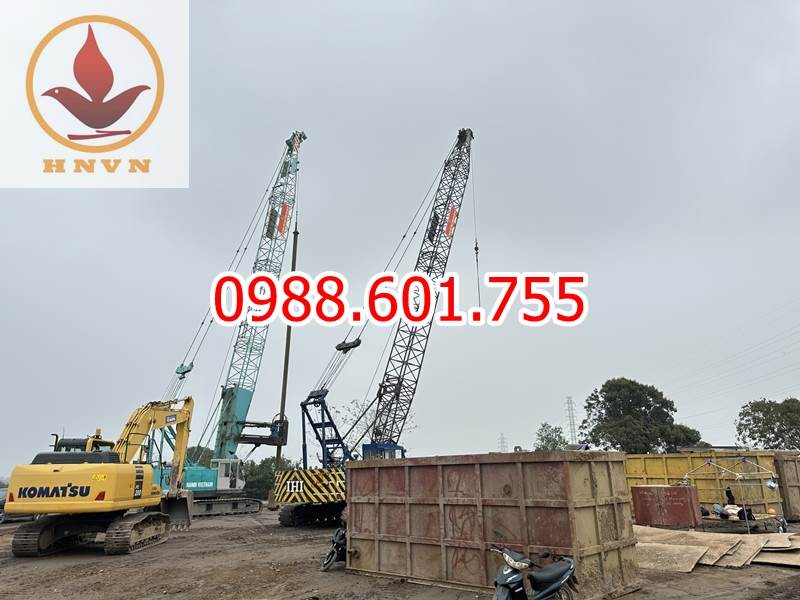
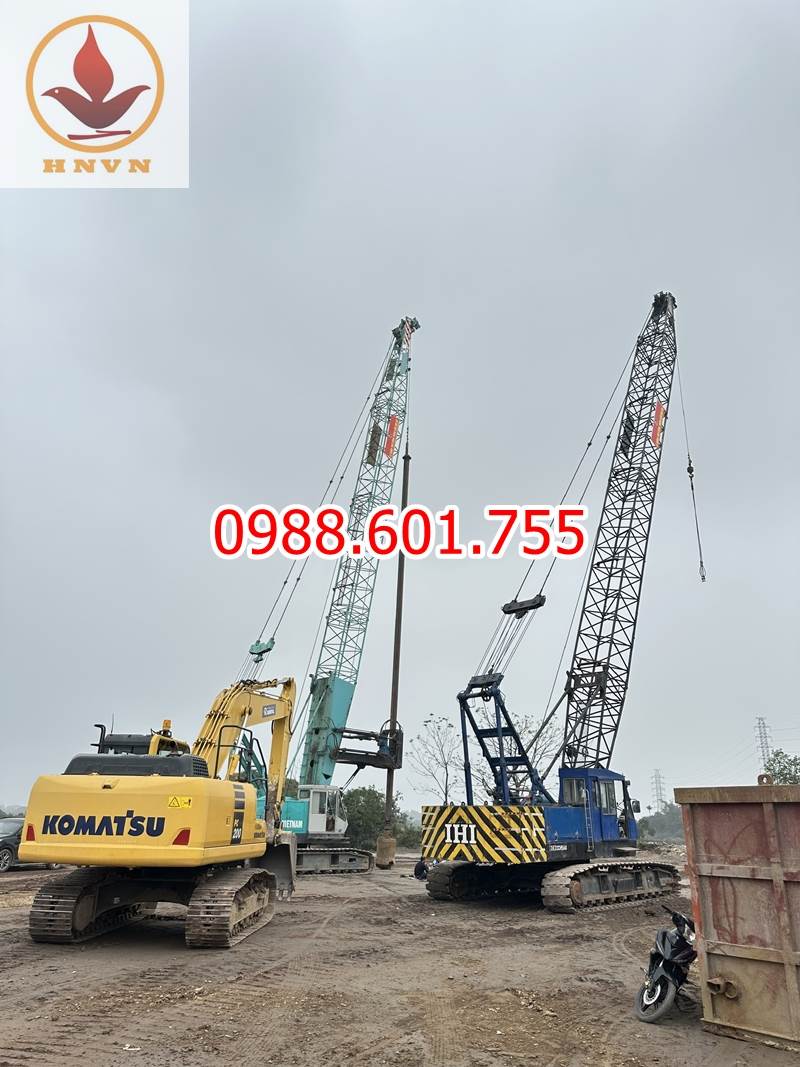
- IHI CCH500-5 (1995) and Sumitomo SD507, with a lifting capacity of 50 tons.
- Used for handling long casing pipes, steel reinforcement cages, bentonite systems, and heavy equipment on site.
The use of dedicated crane support significantly improved casing installation speed and provided flexibility for emergency handling and material logistics.
Use of Indian Bentonite: Borehole Stabilization Solution in Weak Ground
Due to the presence of organic mud, silty clay, and highly plastic soil layers, the risk of borehole wall collapse was extremely high without proper slurry control. The use of Indian bentonite was selected for the following advantages:
- Strong gel-forming properties – creating a stable slurry membrane with excellent sealing performance.
- High suspension capacity – effectively carrying fine sand and drill cuttings during Kelly bar rotation.
- Easy treatment and regeneration – allowing reuse and cost optimization.
Note: Bentonite slurry must be mixed at the correct ratio and supported by a complete sedimentation tank, circulation pump, and filtration system on site to avoid pump blockage and drilling system damage.
Casing Installation from 12m to 18m Using a 60kW Electric Vibro Hammer
Depending on local ground conditions, casing lengths were applied as follows:
- 12m casing: Used in relatively stable layers such as TK2 or medium dense sand strata.
- 18m casing: Applied in zones with organic mud, highly plastic silt, and weak soils to prevent early borehole collapse before reaching bearing layers.
Casing installation equipment included:
- Tomen 60kW electric vibro hammer:
- High vibration force with fast casing penetration.
- Smooth operation with high positioning accuracy.
- Capable of driving casing to depths up to 20m without intermediate welding.
The use of an electric vibro hammer significantly reduced manpower requirements, shortened casing installation time, and minimized pile misalignment risks.
Conclusion
- The subsurface conditions at Dai An Industrial Park are complex, consisting of weak soils, organic mud, and dense sand–gravel layers.
- The construction solution combining a 7055 drilling rig, Indian bentonite slurry, casing lengths up to 18m, and a Tomen 60kW electric vibro hammer proved highly effective.
- 50-ton support cranes such as the SD507 and IHI CCH500-5 ensured construction safety and schedule compliance.
- Proper technical treatment of weak soil layers was the decisive factor for the project’s success.
For technical consultation or construction cooperation, please contact:
HANOI VIETNAM CO., LTD.
Head Office: No. 35, Lot BT3, Dang Xa 2 New Urban Area, Dang Xa, Gia Lam, Hanoi, Vietnam
Yard & Workshop: Phu Duc 1 Hamlet, Phu Dong Commune, Gia Lam District, Hanoi, Vietnam
Website: https://mayxaydunghanoi.com
Facebook: facebook.com/khoandapcap
Hotline: Mr. Henry Noi – +84 988 601 755
Email: hanoi10072017@gmail.com
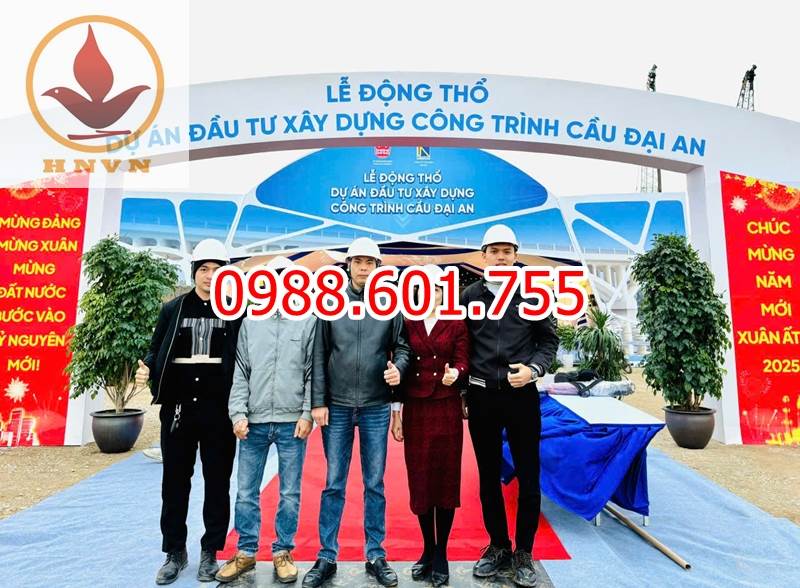
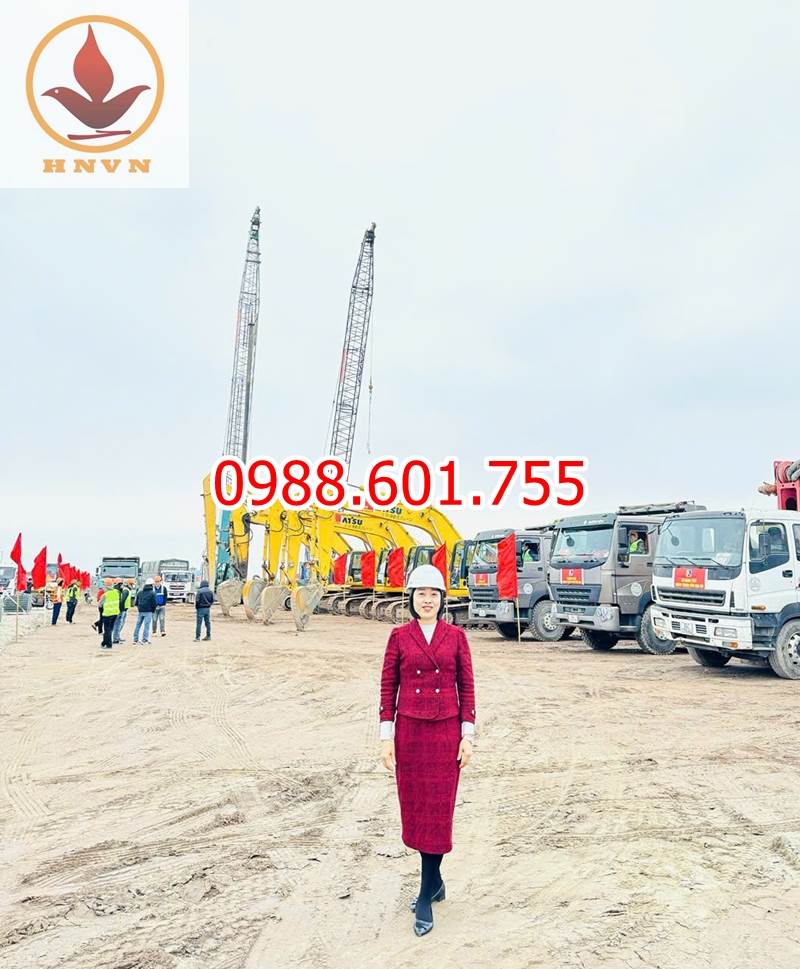
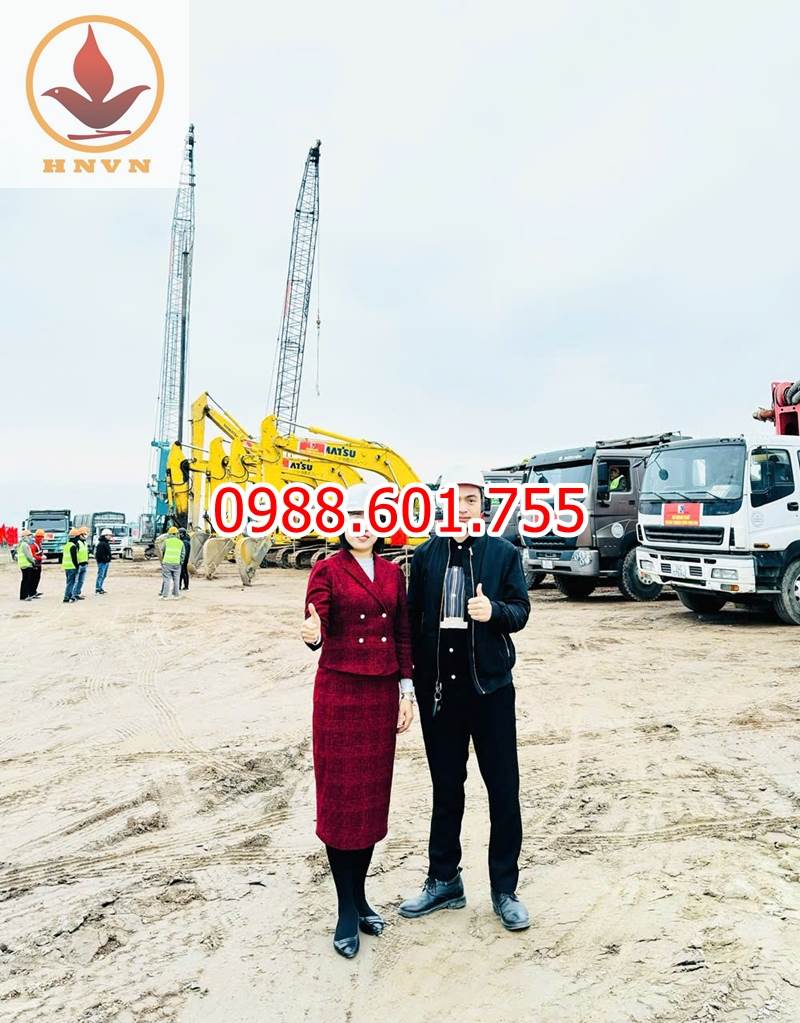
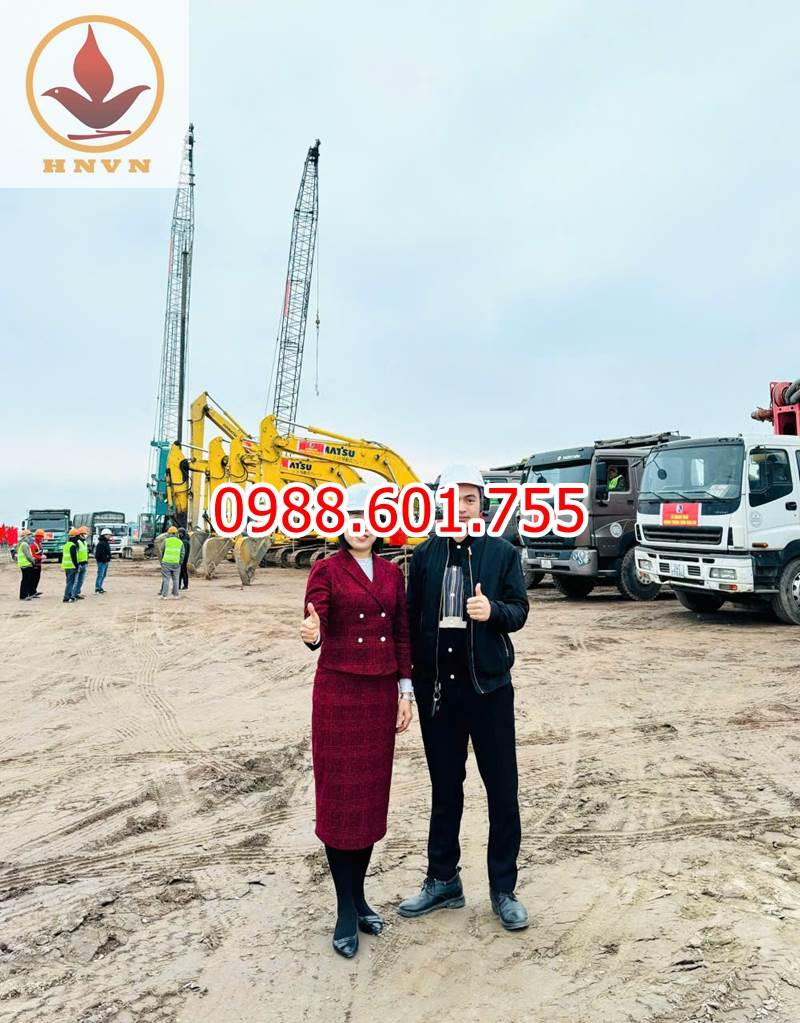
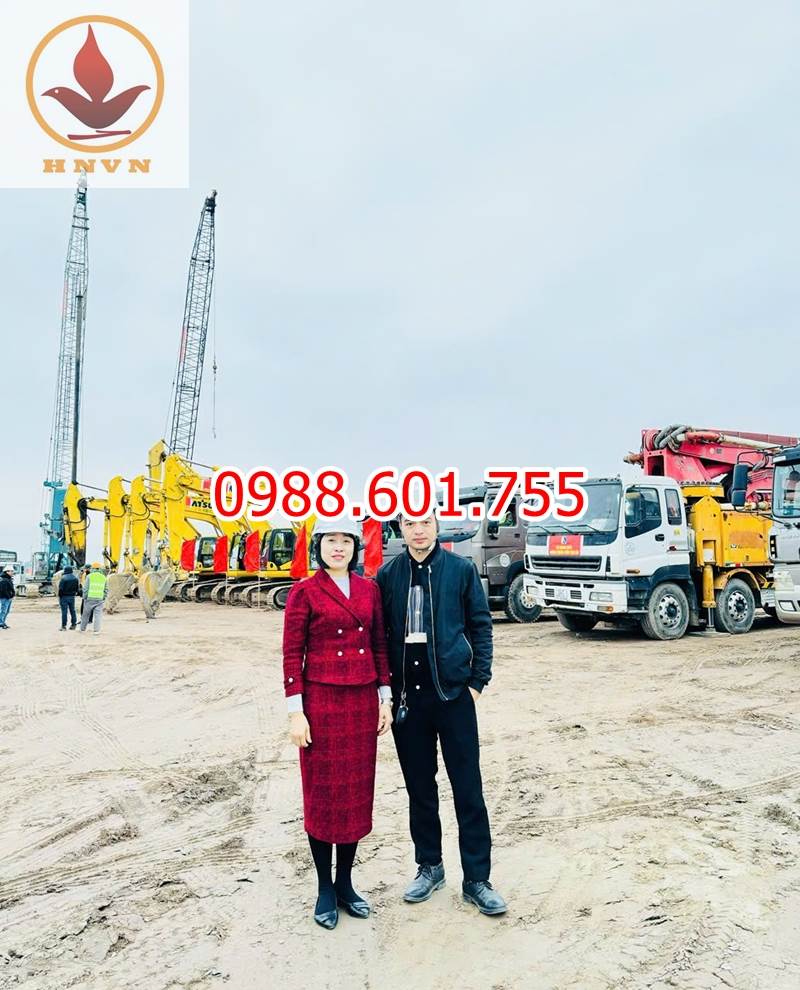
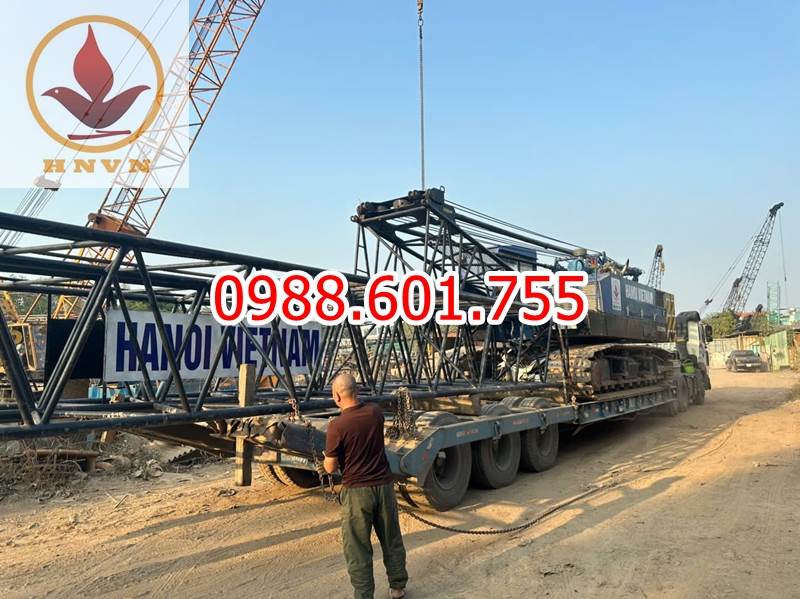
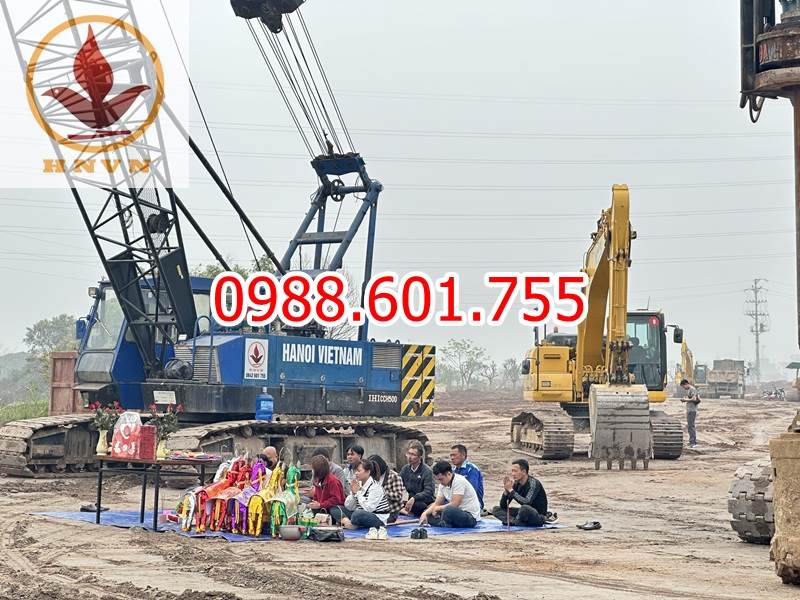
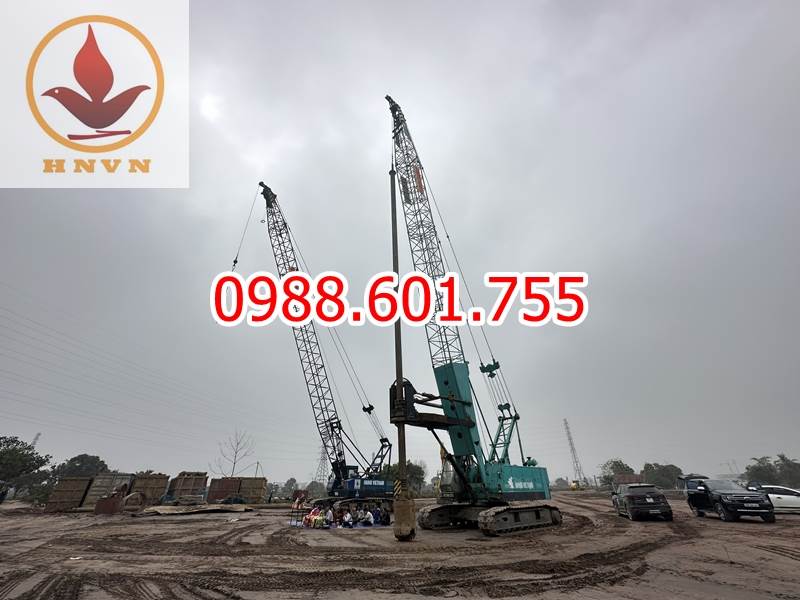
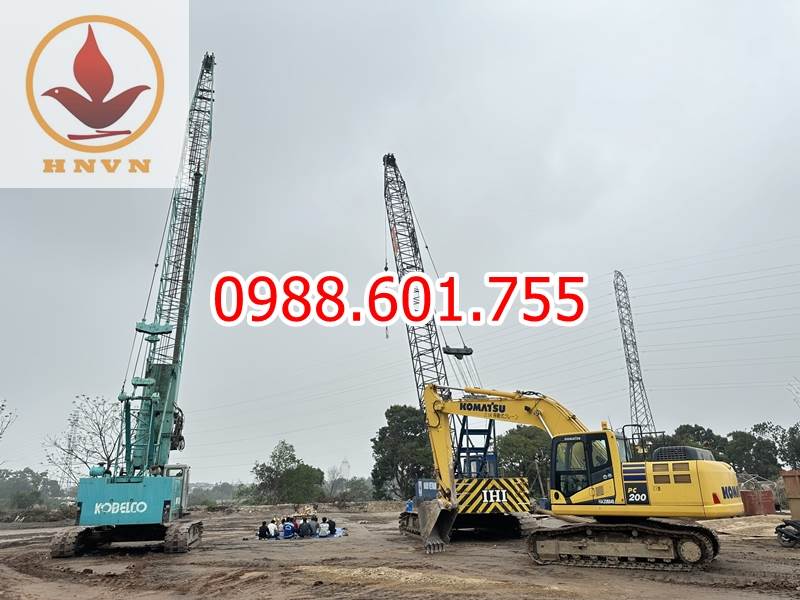
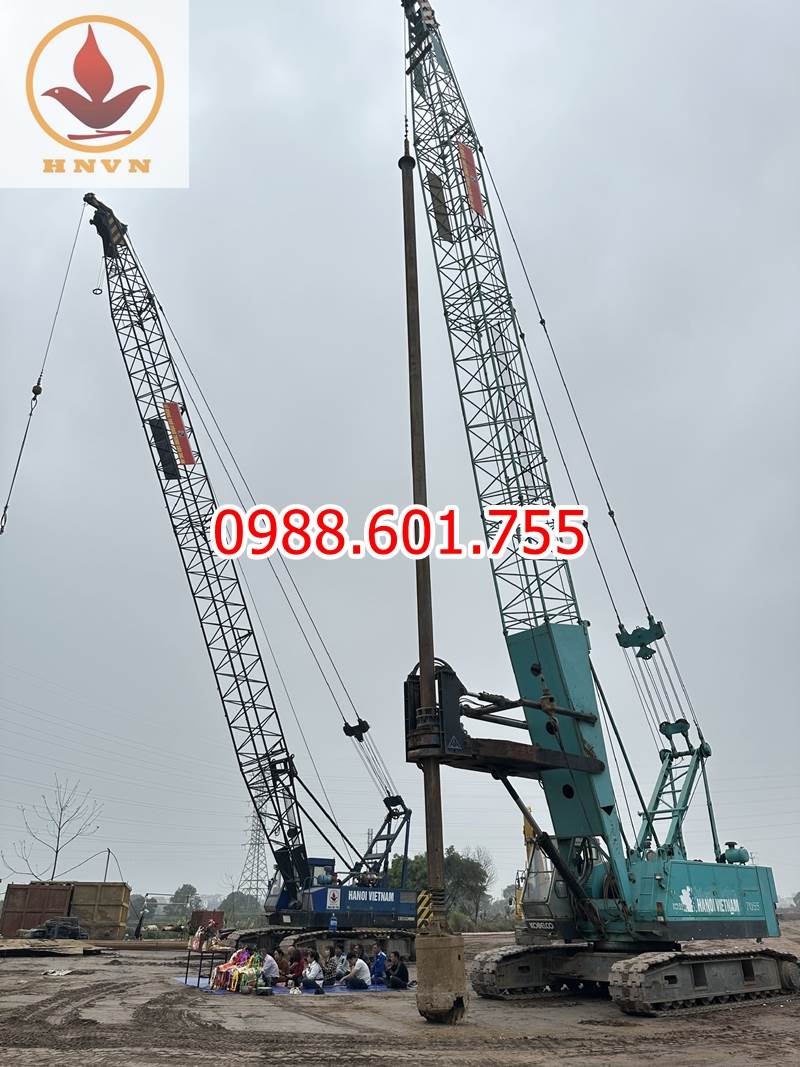
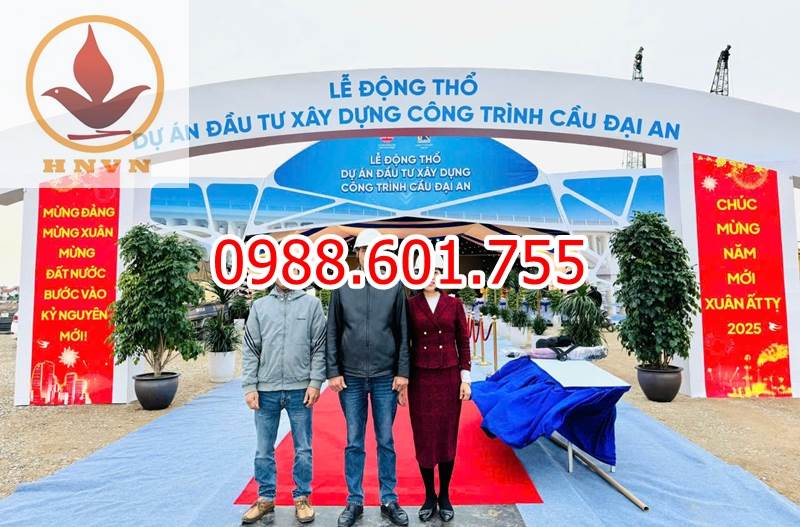
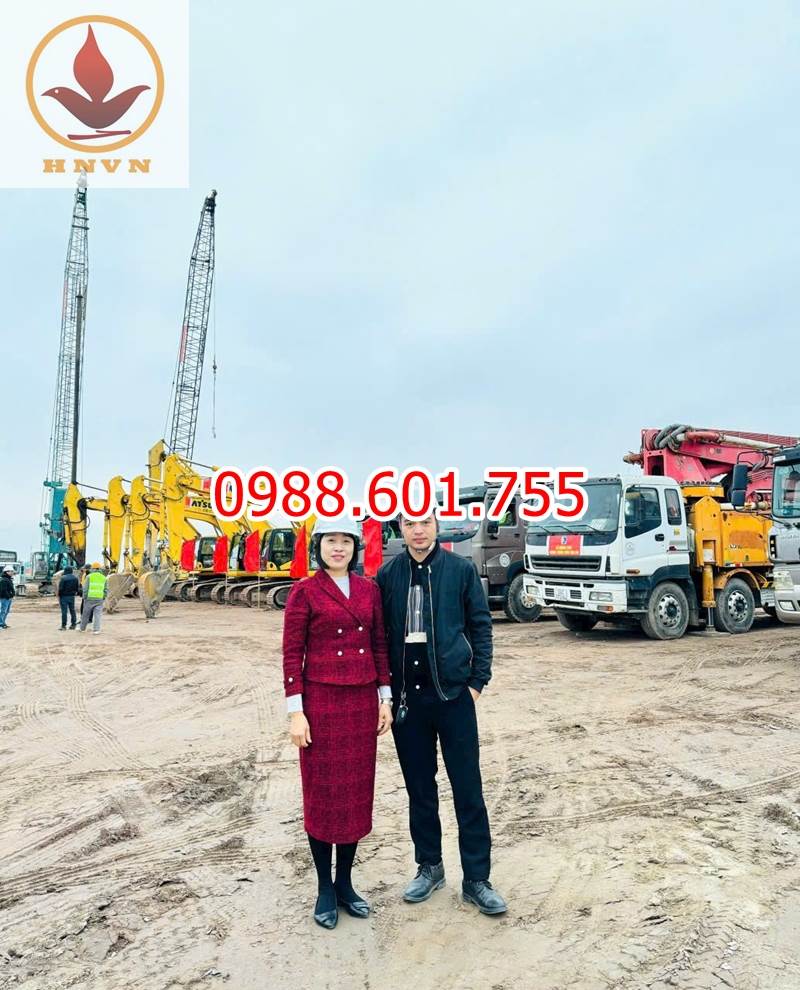
Construction Images – Dai An Industrial Park Overpass, Hai Phong

*Liên hệ nhận thông tin và báo giá: https://mayxaydunghanoi.click/
