


Projects
Diem Phung Thi Road Bridge Construction Project
Hanoi Vietnam Executes Bored Pile Construction for the 20m Road and Bridge (Diem Phung Thi Road) Connecting to the Planned 36m Road – D1200 Piles, Average Depth 60m.
In the implementation of urban transport infrastructure projects—especially those connecting planned road networks to river-crossing bridges—the selection of an appropriate bored pile construction method adapted to geological conditions and site constraints is a decisive factor.
In the Diem Phung Thi area (Gia Lam District, Hanoi), where thick layers of soft flowing clay and sections over existing road foundations are prevalent, careful calculation of equipment configuration, drilling tool selection, and construction safety solutions is mandatory.
In this article, Hanoi Vietnam provides an in-depth analysis of technical aspects, actual construction performance, operational costs, and a comparison with alternative bored pile methods—supporting engineers and project owners in making well-informed decisions.
The discussion focuses on site-specific geological conditions, appropriate drilling rig selection, drilling techniques through soft clay layers, and optimal equipment configuration.
Geological Conditions Affecting the Selection of Drilling Methods
The road and bridge connecting Diem Phung Thi Road to the planned 36m arterial route have a total length exceeding 400 meters, passing through residential areas, existing roadbeds, and river-crossing sections. Based on geotechnical surveys, the alignment can be divided into five typical geological sections:
1. Section KM0+00 – KM0+30.98
The asphalt pavement remains in good condition; no surface removal was conducted. Detailed subsurface drilling was limited; however, caution is required due to narrow working space and existing underground utilities.
2. Section KM0+30.98 – KM0+186.95
A thin fill layer overlies sandy clay strata, allowing relatively easy drilling using standard drilling tools.
3. Section KM0+186.95 – KM0+237.26
This section lies within the bridge-over-river zone, requiring deep drilling under complex geological conditions (addressed separately in the bridge design documentation).
4. Sections from KM0+237.26 to KM0+424.96
Typical geological layers include:
- Surface layer: Cement concrete pavement and residential awnings.
- Layer 1A: Clayey soil, soft plastic state – high risk of borehole collapse.
- Layer 2A: Flowing clayey silt, ash-gray to dark gray, extending beyond 13m in depth.
- Layer 3A: Medium sand mixed with silty clay, medium-dense structure – suitable for pile toe anchoring.
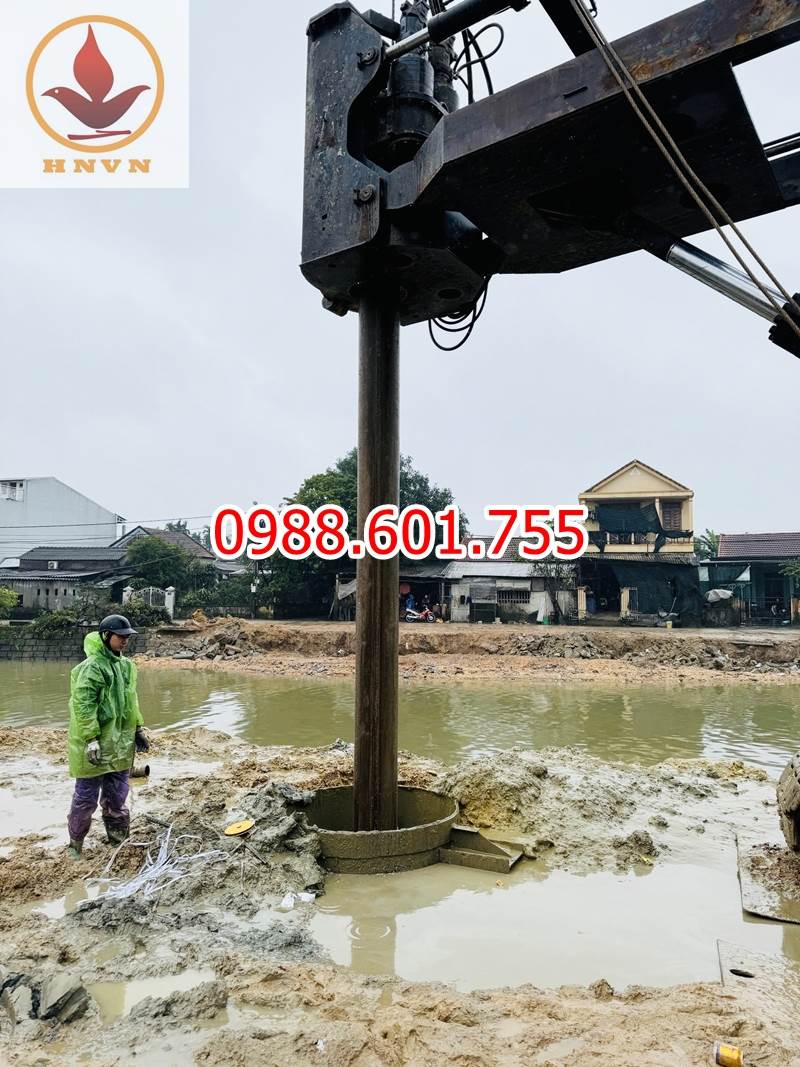
Given these geological characteristics, a flexible Kelly drilling method combined with a high-torque drilling head is essential to ensure borehole stability, prevent collapse, and achieve the design depth for D1200 piles.
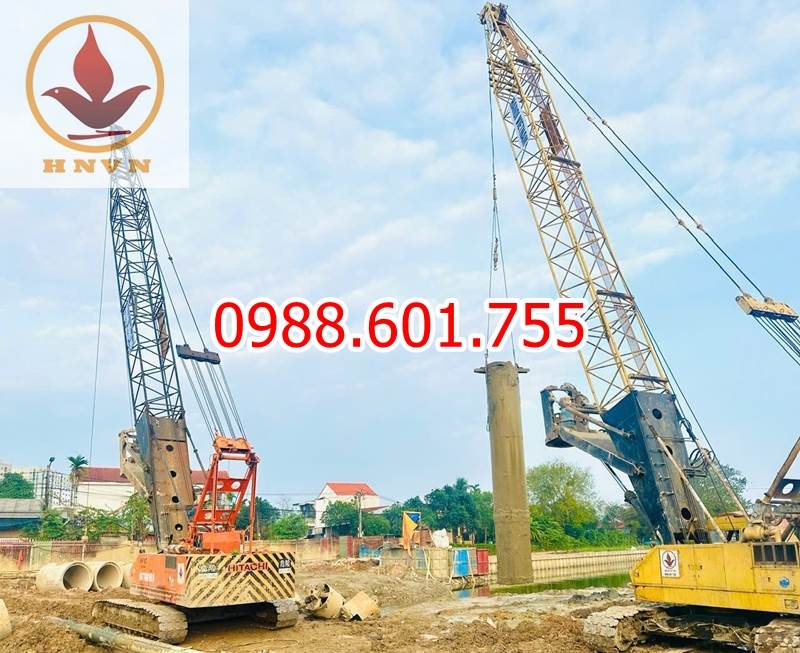
Reasons for Selecting the KH180-3 Drilling Rig for D1200 Bored Piles
The KH180-3 flexible Kelly drilling rig is widely used for projects involving weak soil, high clay content, and large drilling depths exceeding 50 meters.

Key reasons for selection include:
- Capability to handle large-diameter piles (D1200), effectively drilling through flowing clay layers.
- R10 drilling head: high torque and strong cutting capability, suitable for sand–clay mixed strata.
- Flexible Kelly bar design: adaptable for deep drilling, allowing extension beyond standard depths.
- Compact configuration: well-suited for narrow construction sites adjacent to residential areas.
The equipment configuration includes:
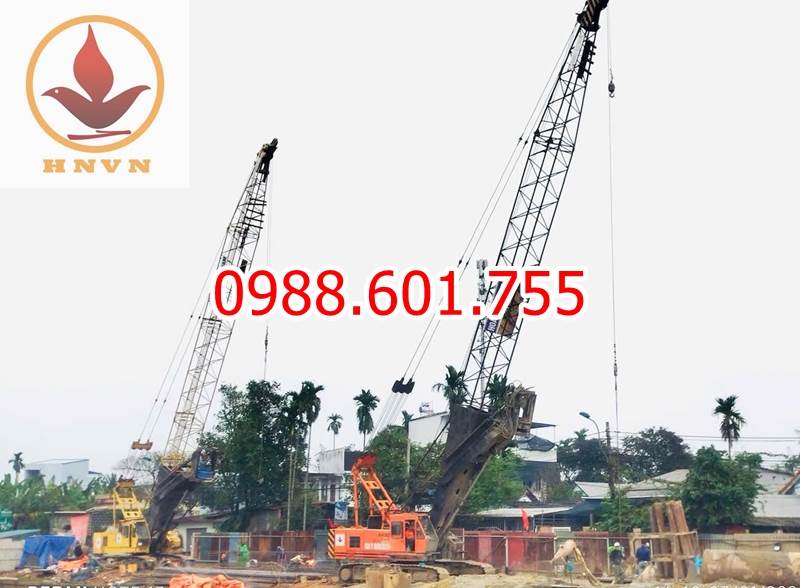
- KH180-3 drilling rig – primary equipment for drilling from ground level to pile toe.
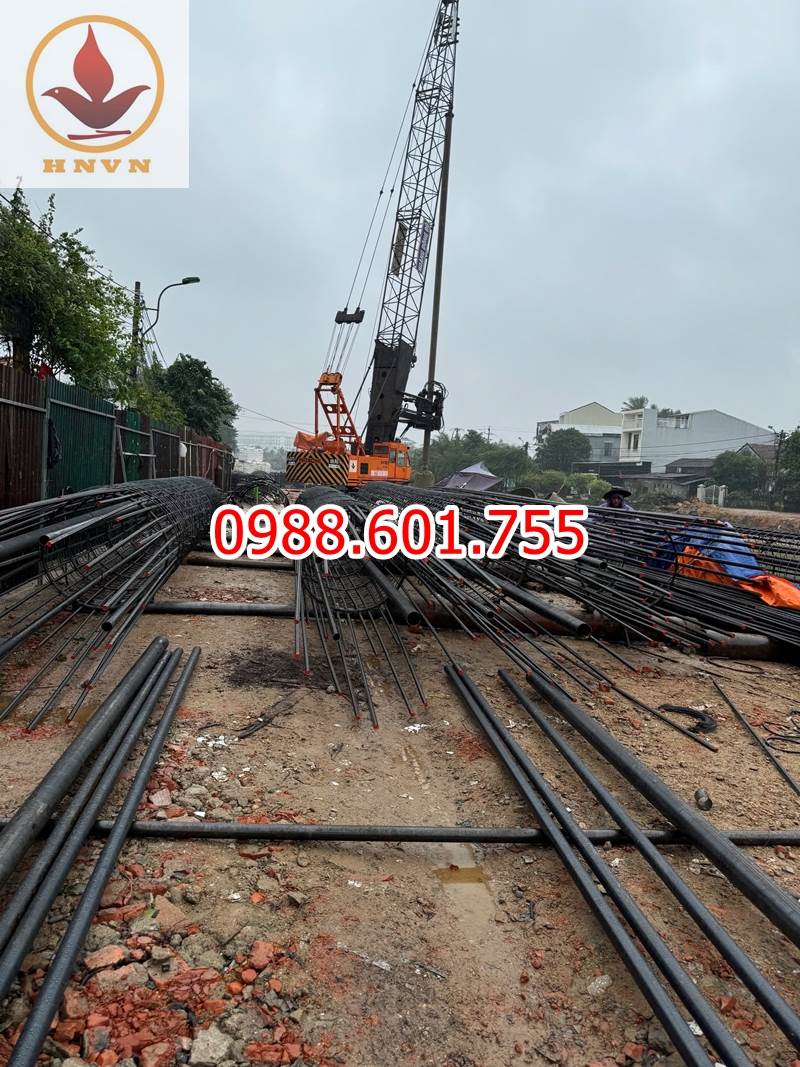
- Crawler crane (KH180-3 class) – auxiliary operations such as casing installation, reinforcement cage placement, and bentonite pumping.
Technical Analysis of Drilling Through Flowing Clay Layers and Borehole Stability Control
The most critical technical challenge on site is the presence of flowing clay layers, especially beyond KM0+237. Effective control measures include:
- Use of bentonite slurry to maintain borehole wall stability and balance earth pressure.
- Continuous drilling through Layer 2A to prevent erosion and collapse caused by prolonged stoppage.
- Selection of appropriate drilling teeth, prioritizing conical, sharp-tooth bits to cut through clay–sand mixtures.
- Temporary casing installation near residential structures where surface stability is weak.
Additionally, drilling equipment must be equipped with vibration and load monitoring systems when operating close to existing buildings.
Comparison with Other Bored Pile Methods: Advantages and Limitations
| Method | Advantages | Limitations |
|---|---|---|
| KH180-3 Flexible Kelly Drilling | – Suitable for soft clay geology – Capable of drilling to 60m depth – Fast mobilization |
– Requires skilled operators |
| Rotary Drilling | – High speed in sand and soil – Low vibration |
– Ineffective in flowing clay – Higher cost |
| Auger Drilling | – Low vibration impact – Efficient for moderate depths |
– Unsuitable for depths >30m – Prone to clogging in clay |
Under the construction conditions in Diem Phung Thi – Gia Lam, the flexible Kelly drilling method with R10 head remains the optimal solution.
Conclusion
- The Diem Phung Thi road–bridge project features complex geological conditions, particularly extensive flowing clay layers.
- The use of D1200 bored piles constructed with the KH180-3 drilling rig offers a cost-effective, technically safe, and reliable solution.
- With synchronized equipment and an experienced construction team, Hanoi Vietnam is fully capable of meeting stringent quality and schedule requirements.
Construction Contact Information
Hanoi Vietnam Co., Ltd.
Website: https://mayxaydunghanoi.com
Facebook: https://www.facebook.com/khoandapcap
Hotline: Mr. Dong Sai Gon – +84 906 601 755
Email: hanoi.trandong@gmail.com
Yard & Workshop: Phu Duc 1 Hamlet, Phu Dong Commune, Gia Lam District, Hanoi
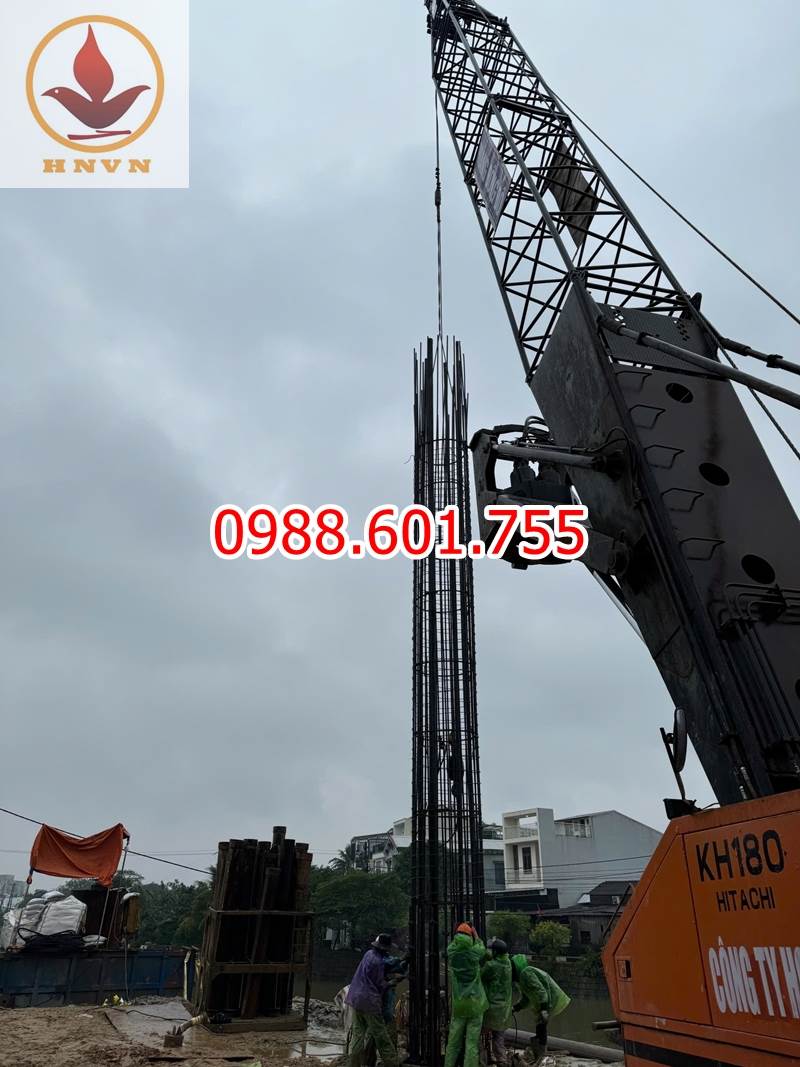
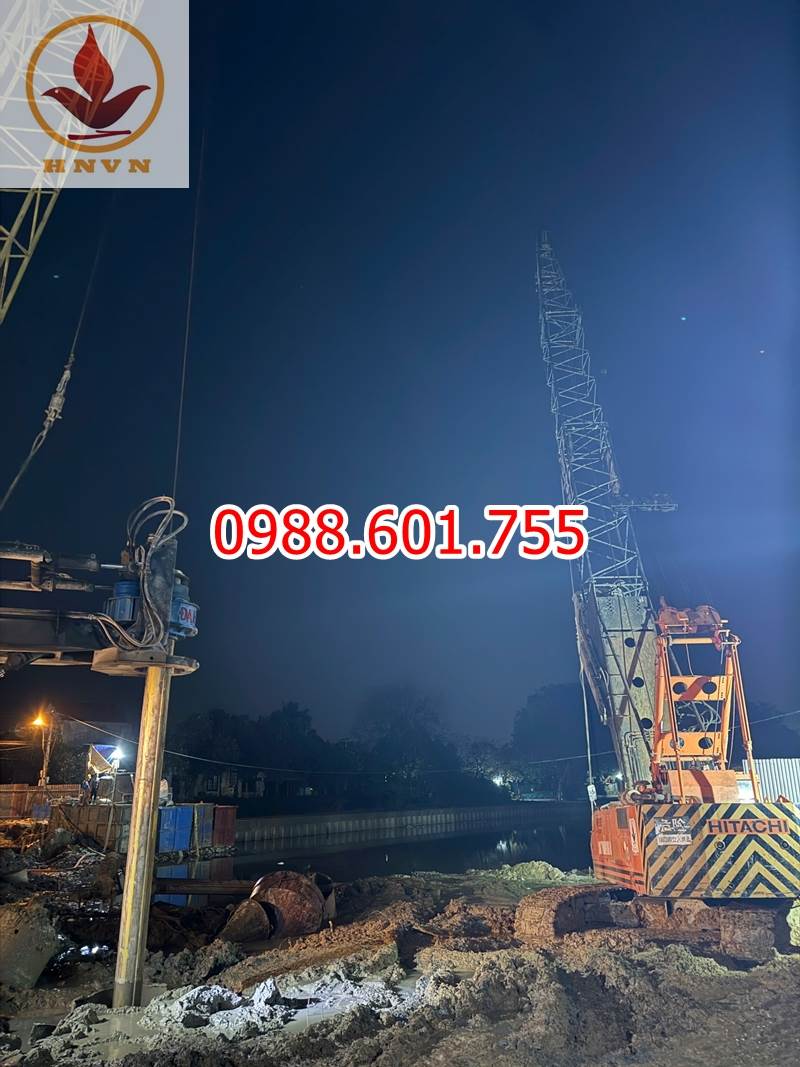
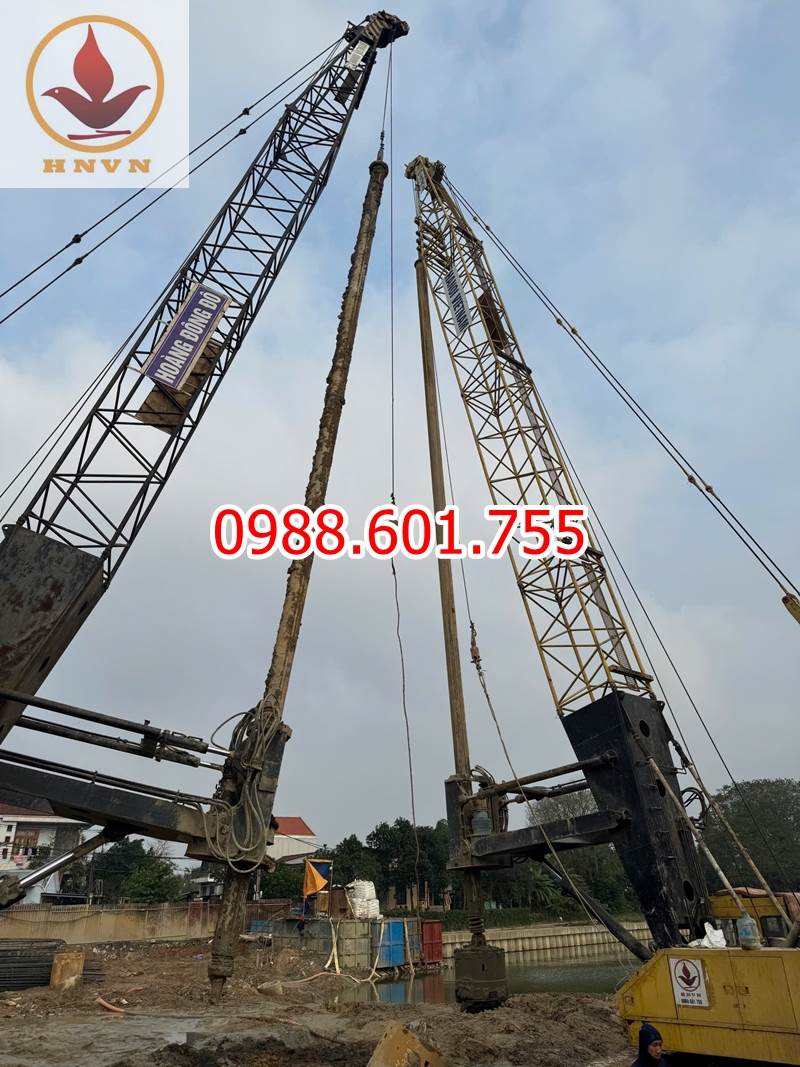
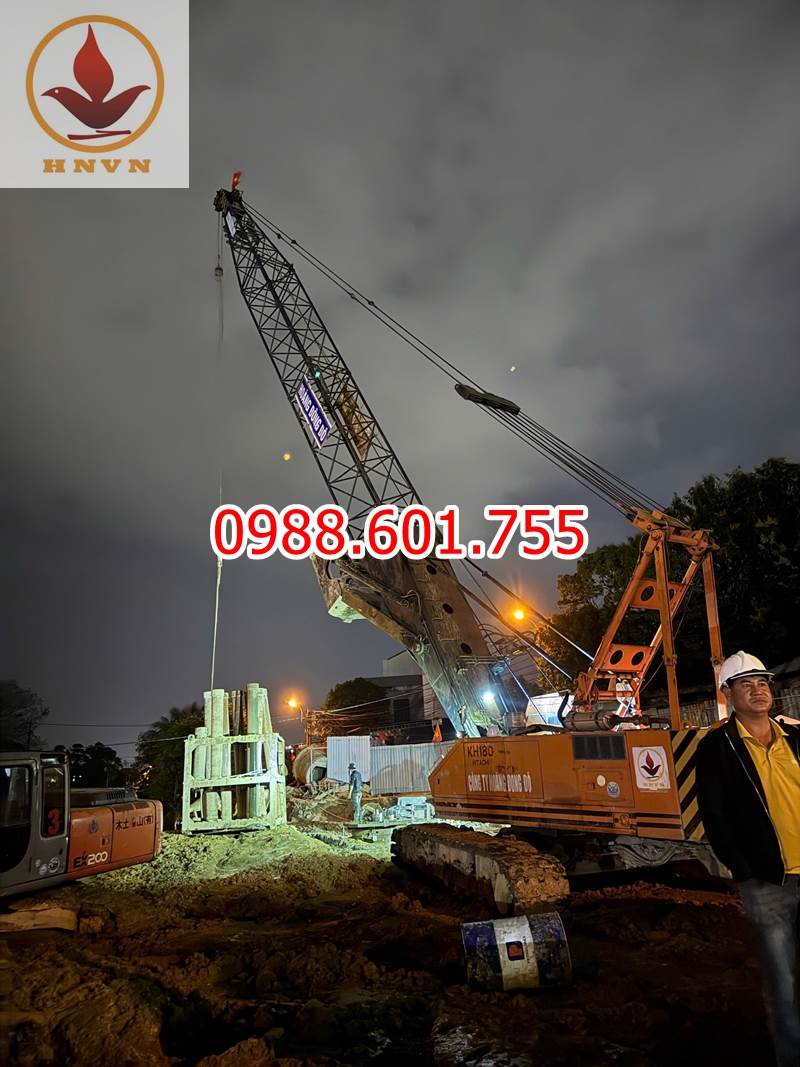
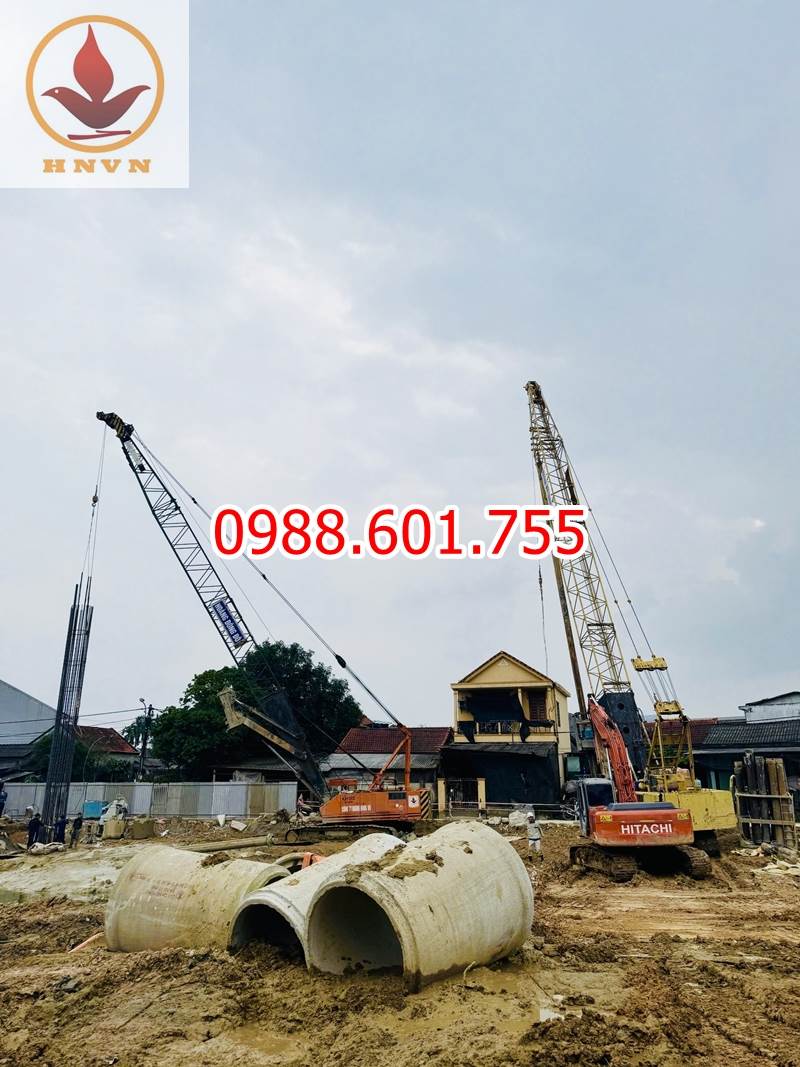
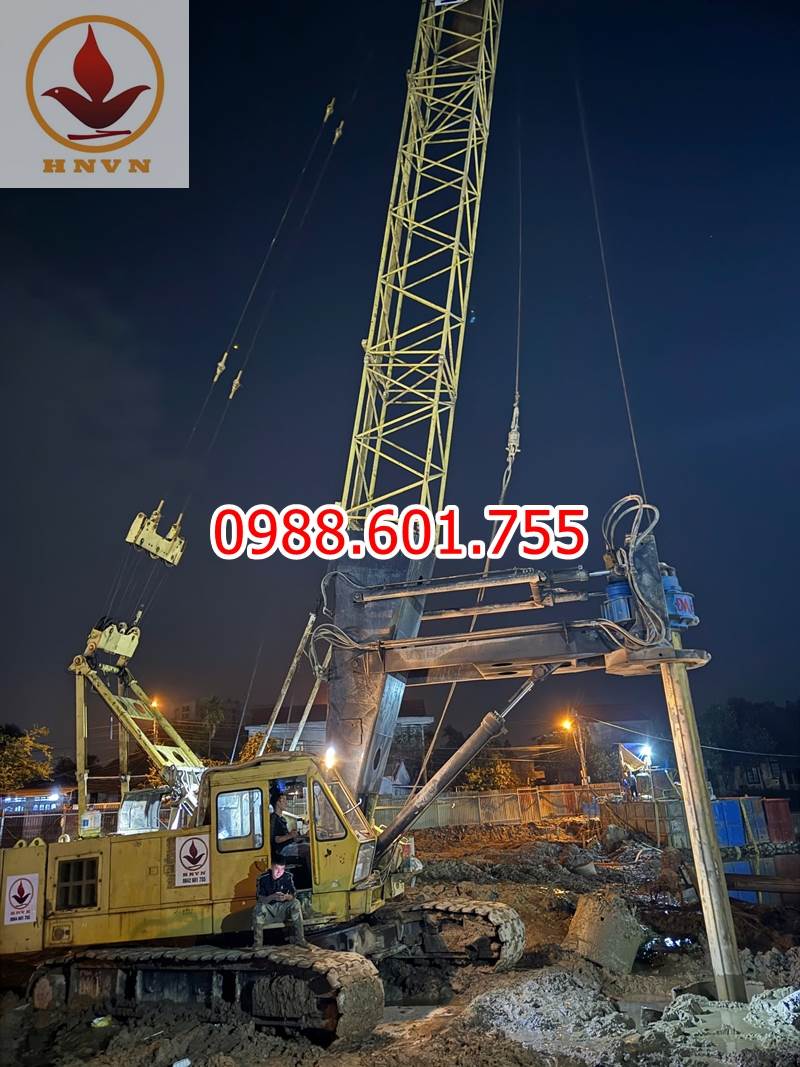
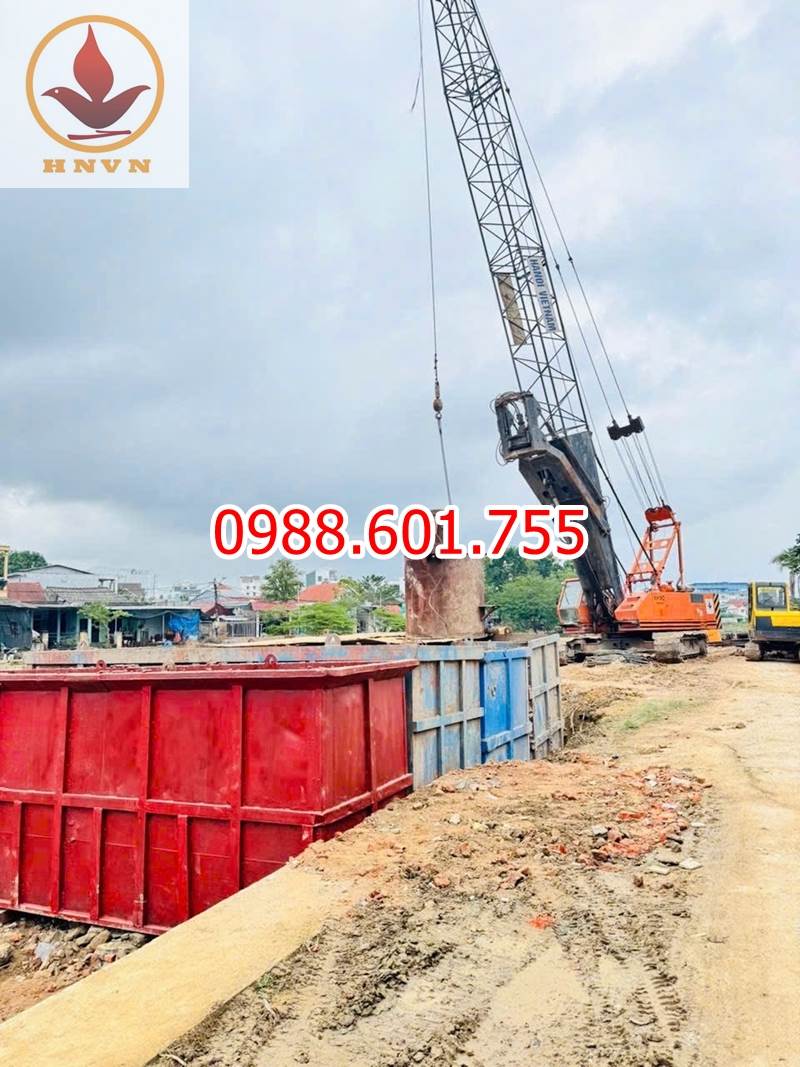
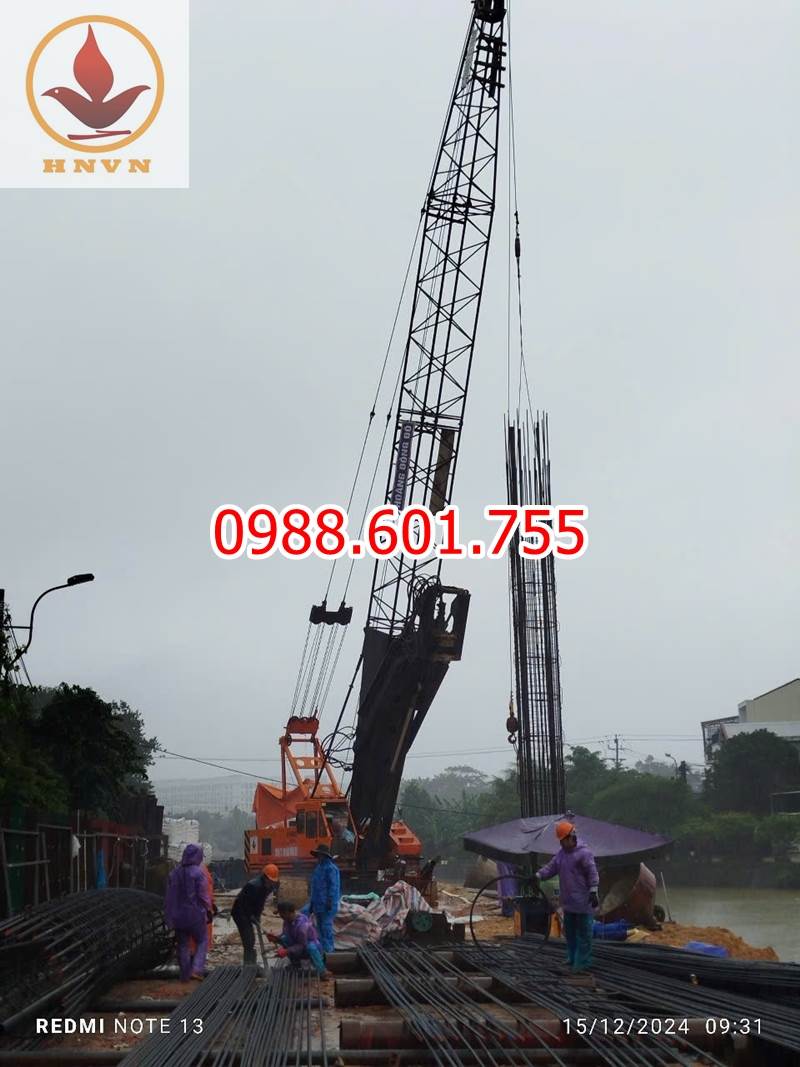
Construction Images – Diem Phung Thi Road & Bridge Project
*Liên hệ nhận thông tin và báo giá: https://mayxaydunghanoi.click/
